


Steel raised anti-static flooring, leveraging its comprehensive advantages, is evolving toward more refined and high-performance applications in high-value, demanding environments such as data centers and command centers. This progression is driven by technological advancements and application requirements.
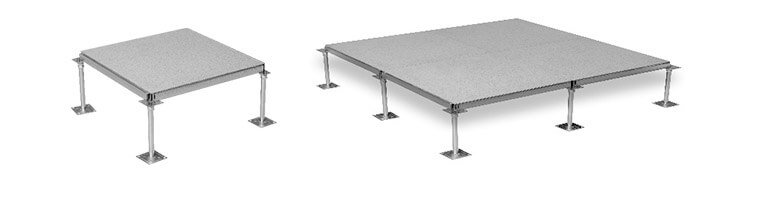
Below are key application trends:
I. Sustained Growth and Strengthening in Core Application Areas
- The “Undisputed Mainstay” for Large and Hyperscale Data Centers
Reason: Steel flooring’s exceptional load-bearing capacity (ideal for heavy cabinets and battery banks), superior fire resistance (Class A non-combustible), durability, and extended lifespan perfectly align with data centers’ stringent requirements for infrastructure safety, stability, and load capacity.
Trend Integration: With explosive growth in cloud computing and AI computing demands, data centers are evolving toward high-density, modular, and rapid deployment models. Steel raised floors effectively support:
High Load Capacity: Supporting heavier server racks and cooling infrastructure.
Flexible Cabling: The underfloor space provides substantial capacity and flexible management for power, fiber optic, and network cables, facilitating maintenance and expansion.
Integration with Precision Air Conditioning: The raised floor acts as a plenum, forming an efficient cooling solution with underfloor precision air conditioning systems—a classic choice in most large data centers. - High-End Command & Control Centers and Communication Rooms
These environments demand system stability and security comparable to data centers, often with additional requirements like confidentiality and electromagnetic interference resistance. Steel flooring’s shielding effectiveness (when specially treated) and robust durability make it the preferred choice.
II. Technological Evolution and Product Upgrade Trends
- Surface Treatment and Material Process Upgrades
High Wear Resistance and Corrosion Protection: Utilizing premium cold-rolled steel plates combined with high-performance HPL (High-Pressure Laminate) or PVC laminates. For environments with heightened corrosion requirements (e.g., coastal regions, specific industrial settings), the adoption of galvanized steel substrates or powder coating processes is increasing to extend flooring lifespan. - Structural and Performance Optimization
Reinforced Structure: To meet increased load-bearing demands, box-type (also known as structural) all-steel flooring has become the dominant choice. Its internal cross-braced reinforcement structure achieves exceptional load capacity and impact resistance while maintaining lightweight construction.
Precise System Resistance: Electrostatic dissipation performance is more stable and controllable, with system resistance typically maintained between 10^6 and 10^9 ohms. This effectively prevents static buildup while ensuring gradual discharge to ground, protecting sensitive components.
Improved Edge Treatment: Flexible conductive adhesive strips are used for edging, preventing edge peeling while ensuring reliable electrical continuity between floor panels.